
Pathways to Cognitive Wellness: Transformational Leadership in Action
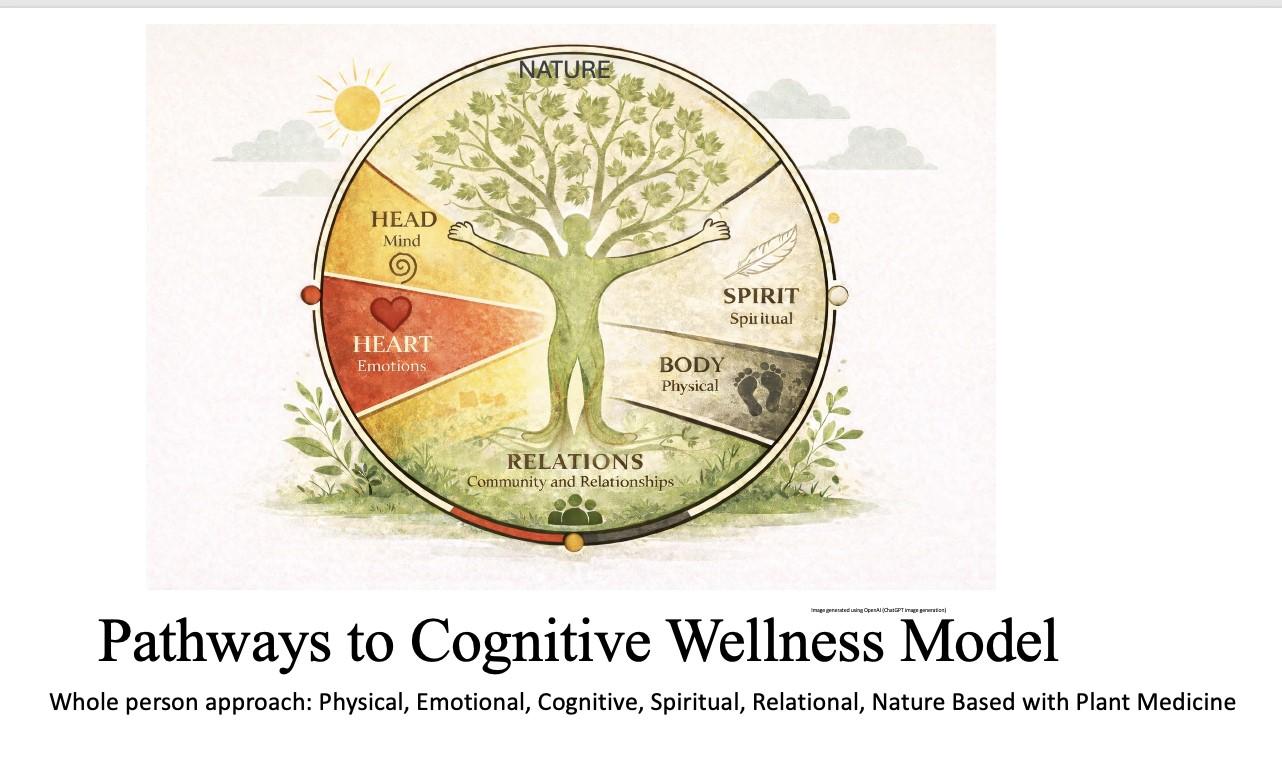
What if dementia‑risk reduction was less about “trying harder” and more about learning differently together?
Pathways to Cognitive Wellness (PCW) is led by Dr. Kathy Bishop and an interdisciplinary team - Dr. Wendy Young, Senior Researcher and Project Coordinator, Kim Haxton, Traditional Knowledge Keepers, Dr. Jasdeep Saluja, Chief Medical Officer, Aroga Lifestyle Medicine Clinic, and Dr. Alexandre Henri-Bhargava, Neurologist, UBC and Island Health. PCW is a 12‑week program that looks to reduce risk of dementia through transformational learning. Instead of offering more information and hoping for the best, PCW is built around a simple, powerful change loop:
Values & stories → Small, realistic steps → Reflection & meaning‑making → Adjustment in community.
This is our transformational learning approach—learning by doing, noticing, and gently trying again, in relationship with others and our environment.
Each week, older adults explore a different theme—Being Good Medicine, Strengthening Relational Roots, Eating & Drinking, Moving and Resting, Preparing and Integrating Ceremony, Heading for Lifelong Learning, Becoming the Ancestor You Want to Be—through short teachings, gentle reflection, and one small, values‑aligned action. They are invited to see themselves as leading their inner team (Head, Heart, Body, Nature, Spirit, Relations‑Within) in relationship with an outer team of family, community, Elders, Knowledge Keepers, healers, and clinicians.
What makes this work high‑impact is its deliberate simplicity and do‑ability. Each week in the online environment offers:
- A brief “why this week matters” overview
- One or two short teachings or videos
- A small menu of reflection prompts
- One gentle action to try in everyday life
- Connections with others
For many older adults—living with fatigue, caregiving, grief, or digital hesitancy—this is the difference between dropping out and discovering that change is actually possible.
Funding was generously received from the Centre for Aging + Brain Health Innovation, as well as New Ways Funding from Royal Roads University. Having designed the program, currently new funding is being sought to run it.
PCW is leading the way through interweaving knowledges. Brain‑health and dementia‑prevention science, lifestyle medicine (including the six pillars), and Indigenous wisdom are woven together with transformational learning practices. Land‑based gatherings, ceremony, and a psilocybin outdoor ceremony will sit alongside work on blood pressure, sleep, movement, food, lifelong learning, and tiny habits. Participants are not asked to choose between worldviews; instead, their lived experience helps hold them together.
PCW showcases transformational leadership beyond the classroom. It demonstrates how theory can become a lived change model, how Indigenous and Western knowledges can be weaved together, and how late‑life health work can position older adults not as passive recipients, but as leaders of their own teams and pathways.
It is, in other words, leadership practice at the edge of one of our most pressing social challenges—and a glimpse of how much more is possible when we design for leading self, leading with others, being in relationship, connecting to nature, and engaging in small steps, rather than for information alone.