
Learning to pivot in business and life
Topics
Featured
Share online
Learn more about the Bachelor of Business Administration (BBA).
Business challenges rarely follow a straight line.
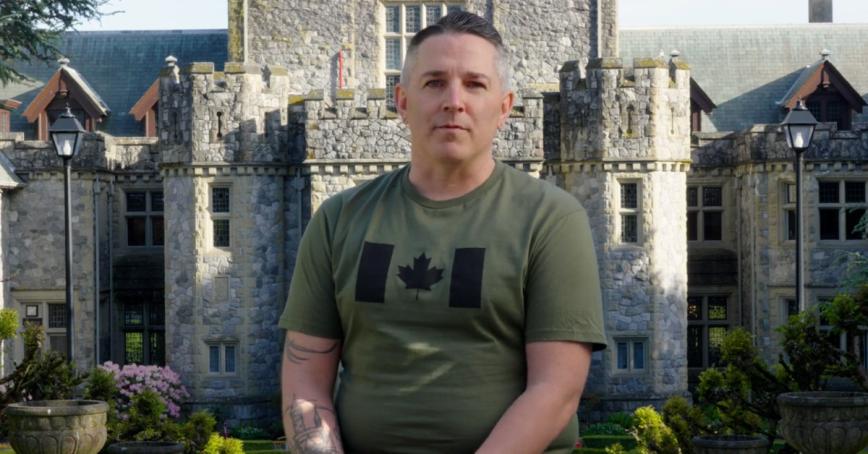
For Steven Smith, BBA Class of 2025, learning to adapt to change was a universal lesson with lasting impact.
“Sometimes things change or just don’t work out, and you have to adapt in the moment and pivot quickly,” he says. “The way we learned about business really ingrained in me the immediate need to take a more holistic approach to my decisions and planning. You learned very quickly ... how to think more systematically rather than siloed.”
University done differently
That approach was part of what attracted Smith to Royal Roads University. Looking to advance his career in the Canadian Armed Forces, he was researching post-secondary degree options that aligned with his goals and interests when he found the BBA. The program’s condensed duration and focus on live case studies rather than exams stood out.
“The BBA is more than a business program because of the focus on innovation and sustainability,” he says. “Those are super important skills and knowledge sets to have in a world that is changing. The rigid ways of doing things just don’t work anymore in a lot of cases.”
Smith also appreciated the flexible admissions process, which looked at life and academic experience.
“They were gathering the information needed to ensure not only was RRU a good fit for me, but that I was a good fit for RRU,” he says.
Learning for real life
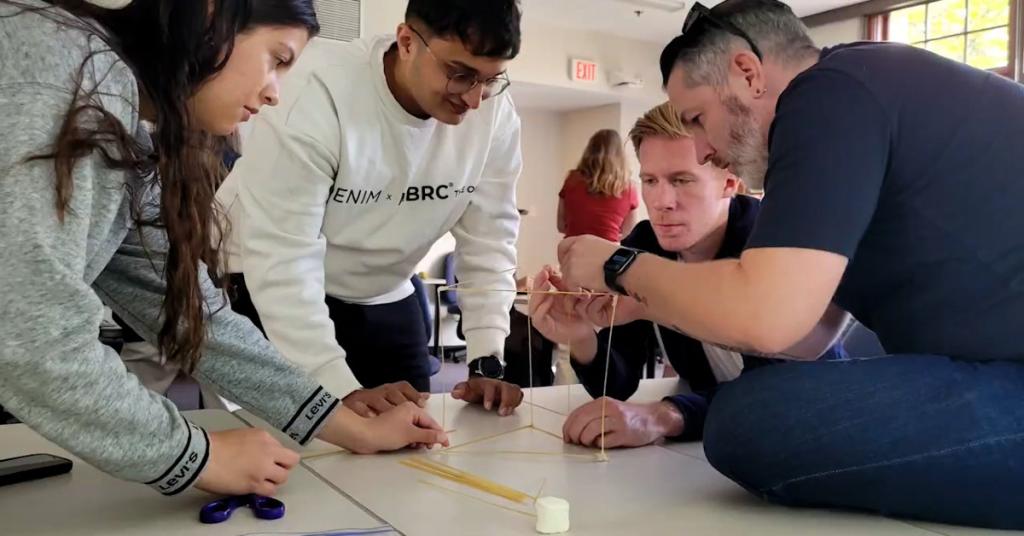
In the classroom, working with real clients taught Smith how to apply theories to real business challenges. The live case studies were diverse and included fundraising opportunities for a regional district, helping a meal kit organization transition from a for-profit to a not-for-profit model, and supply chain mapping and traceability analysis for a concrete company. Add in work on an equity portfolio, a business case for an aquaponics operation, and service improvements for an organization supporting women in STEM, and Smith learned the research skills needed to work across sectors.
“It really helped me realize that business knowledge isn’t specific to one situation or industry,” he says. “What works well in one situation may very well be able to be applied in another. It’s all transferable knowledge and skills.”
Without hesitation, Smith describes his capstone project as “quite the undertaking.” The university had recently done a climate risk assessment that included a “Roadmap to Resilience” giving recommendations for its Climate Action Plan 2025-2030. His project was to review the assessment and provide a viable plan for the university to move the recommendations into action. Unlike the rest of the coursework, the capstone was an individual undertaking.
“It was a good way to find out that everything I had learned throughout the program, I could apply on my own,” he says. “It gives you a chance to really exercise those skills.”
The way forward
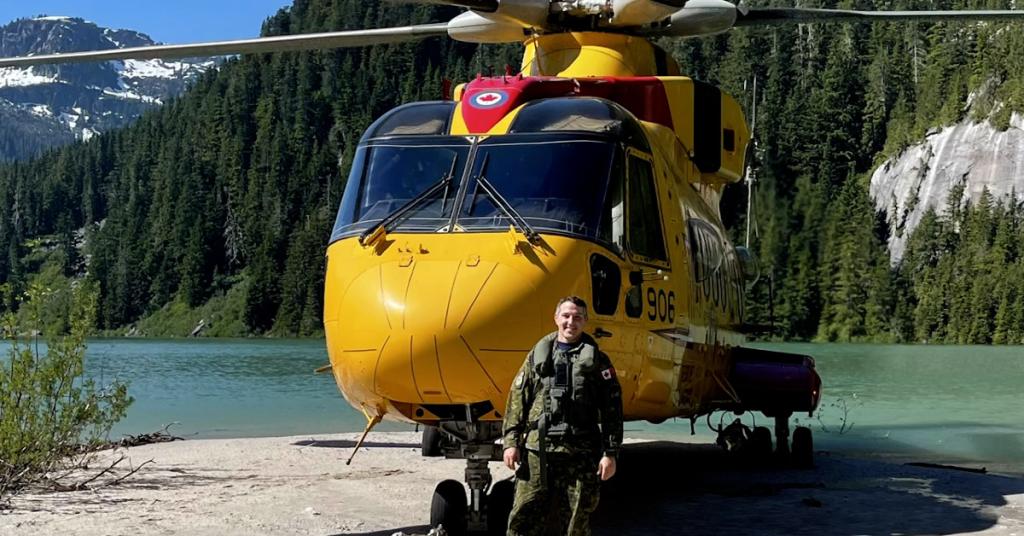
At work, Smith is furthering his training as an air traffic controller. He sees the mindset he developed in the BBA show up in his training and workdays.
“In so many ways, the various units involved in the military function as businesses themselves. Every unit has supervisors, managers, and workers who need to figure out how to make that portion of the organization run smoothly,” he says. “I left the BBA more confident in my ability to lead through complexity and uncertainty. It changed how I approach leadership, and particularly in environments where public service, accountability, and long-term outcomes matter.”
Learn more about the Bachelor of Business Administration (BBA).