
The eye of the storm: Menopolooza aims to demystify
Learn more about the Master of Arts in Leadership (Health Specialization).
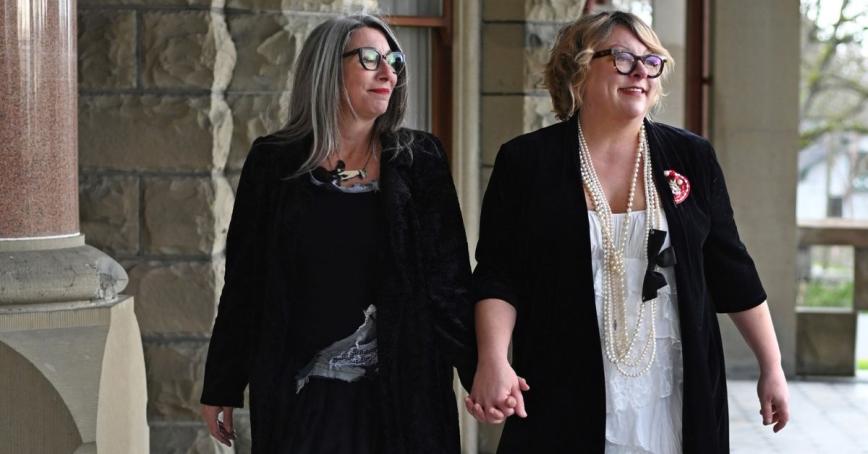
Photo credit: Don Denton
In the eye of a storm, the way through isn’t straightforward.
The same can be said for women’s mid-life health. It’s a transition that requires a nervous system intervention approached as a systems problem, not a symptoms problem.
“We are applying simple research techniques to a chaotic system, and it does not work,” says Dr. Tracy Rodgers, OBGYN. “You can’t stick a ruler in that hurricane and come out with something that you then make rules for everybody and call it done.”
That’s why together with Bryn Meadows, a counsellor specializing in the complexities women face in mid-life, they designed Menopolooza, an innovative women’s health conference based on many of the lessons learned while studying in the Master of Arts in Leadership (Health Specialization). The goal is to change the way menopause is perceived and supported because what they are hearing goes far beyond hot flashes and disrupted sleep.
Not your average medical conference
Menopolooza 2 is part conference, part community gathering, and part research-informed dialogue to educate and empower women. Hosted in Victoria May 15-17, it brings medical expertise, mental health perspectives, and lived experience into the same room to influence change at a personal and systems level.
As they prepare to host the second event, the women reflect on the emotions, energy and connections made during the first.
“No one wanted to leave – if you can believe that about a medical conference!” says Meadows. “As soon as the first one wrapped, we started planning this one.”
Measuring the unmeasurable
That’s why the research techniques learned at Royal Roads are so valuable, the women agree. Grounded theory research has shaped the space and pace of Menopolooza.
“We made an environment where women felt seen and safe, and willing to be vulnerable to talk about their experiences,” Rodgers says. “We got to hear their stories.”
“We created the conditions that allowed the information to come through,” Meadows adds. “That’s what the RRU leadership training taught us.”
And those stories are data points that show undeniable truths about women’s overlooked experiences that are hard to measure, says Rodgers, adding “We have to trust women’s experiences in their own bodies.”
Across their professional practices, they are seeing a trend beyond the recognized impacts of menopause. Women in midlife are self-medicating through substances or relapsing after years of sobriety, Meadows says. They are also at higher risk of suicide. With limited support options that recognize the connections between addiction, recovery, and menopause, women are falling through the cracks.
Where to next
What started as a conference has inspired new work on supporting addiction and recovery — from substance, grief, loss of self, and more — during menopause. Meadows and Rodgers are working to develop new programs to help women weather the transition with a focus on their whole body and mind wellbeing.
Menopolooza 2 is helping raise awareness of the need for this work, including a “Roper Romp” on May 16 — a walk to the BC Parliament Buildings to joyfully raise awareness. Conversations with the Hon. Josie Osborne, BC Minister of Health, are part of that as well.
“We are taught to disconnect from our bodies and pretend we are ok when we are not,” Rodgers says. “This is a call to come home to yourself, to move yourself higher up the priority scale.”
“Nobody should be this uninformed about their health. We want to raise awareness, so people get curious and want to learn more,” Meadows adds. “Our connection is where we heal best. In community.”