
BC health leader Lorrie Cramb combines experience, DSocSci education
Learn more about the Doctor of Social Sciences at Royal Roads University.
If Canada wants to address the many, varied and interconnected challenges facing health care, it will need all hands on deck.
That means, yes, training and hiring more doctors and nurses. But according to Lorrie Cramb, it also means making efficient use of all members of the health care team, including the lesser-known allied health workforce.
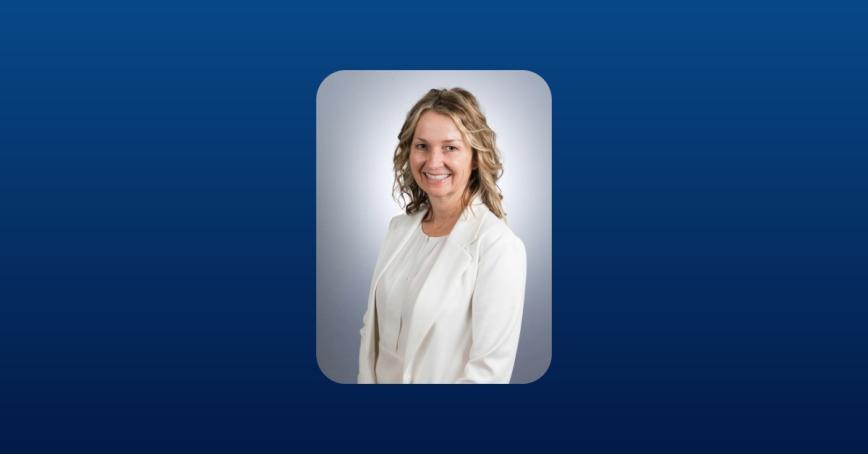
Cramb is BC’s provincial chief allied health officer as well as executive director of the Ministry of Health’s Allied Health Policy Secretariat – the first role of its kind in both British Columbia and Canada . She’s also a first-year student in Royal Roads University’s Doctor of Social Sciences (DSocSci) program whose research is focused on addressing inequities and opportunities in allied health workforce planning, policy and governance in Canada.
What is allied health?
While there is no single definition of allied health, the province recognizes more than 70 allied heath disciplines and says that this workforce “provides a range of preventative, diagnostic, technical and therapeutic health care and clinical support services.”
Professionals who fall under the allied health banner range from audiologists to physiotherapists, from dialysis technicians to radiation therapists, and from clinical counsellors to kinesiologists.
I have this internal passion. I’m very grateful for being in this position because I see things that I feel like I have some potential to influence… I feel like some days, I have a moral obligation to do this work because if I don't, then who? And if not now, then when?
They also include dietitians — Cramb’s professional background — and each has a critical role to play, she says.
“We want to support health professions but, ultimately, we need to see better patient outcomes as a province,” Cramb says. That means that “we want the right person to provide the right care at the right time. It's about optimizing everyone's roles and preserving the highly skilled expertise at the top level for those who need it.”
Looking at patient needs, health professional competencies
Her focus, both professionally and in her RRU research, is on “strengthening the role of allied health leadership and governance across Canada so that allied health professionals have a stronger voice at decision-making tables. Ultimately, this leads to more effective utilization and integration into team based, sustainable models of care.”
For example, with musculoskeletal injuries and mental health/substance use accounting for a large percentage of emergency room visits in BC, there is an opportunity for allied health professionals — including physiotherapists, social workers, psychologists and others — to divert admissions, alleviate the burden on ER doctors and nurses, and contribute meaningfully as part of team-based care. In addition, without diagnostic and medical imaging staff (also part of allied health), in most cases, doctors and nurses are unable to develop a treatment or care plan.
“My interest is not a siloed approach to health care,” Cramb says. “This is about addressing social and structural inequities across workforce planning and policy development at all levels of the health system so that we prioritize patient and service delivery needs, versus the more historical, profession-centred approach. Given continued HHR shortages globally and overlapping scopes of practice, health system leaders need to think strategically about how to make the most with the teams they have.”
Cramb notes that voices like hers — that of someone who has worked in allied health leadership for more than 20 years — don’t exist in the rest of Canada even though an estimated 90,000 people in BC alone work in those 70-plus allied health categories.
A unique perspective, a sense of obligation
She says combining her unique perspective with the academic rigour of the DSocSci program is an opportunity to fill the research gap that exists in the Canadian health workforce literature, in which allied health professions are “invisible.”
Cramb, whose provincial chief allied health officer role and Ministry of Health team are the only government departments in Canada that focus on allied health, says this country is lagging compared to other jurisdictions like Australia, New Zealand and the U.K. in focusing on the allied health workforce — which is another reason behind taking on the challenge of a doctoral program while also working full-time on BC’s allied health workforce priorities.
“I have this internal passion,” she says. “I’m very grateful for being in this position because I see things that I feel like I have some potential to influence… I feel like some days, I have a moral obligation to do this work because if I don't, then who? And if not now, then when?”